Understanding Peptide Pureness Testing
Peptide Pureness & Quantitation Screening
HPLC measures chromatographic purity by dividing the target peptide from associated pollutants and calculating main-peak area percent. Mass spectrometry validates molecular identity by checking whether the gauged mass matches the anticipated peptide mass. For research-grade peptide credentials, HPLC and LC-MS/ESI-MS answer various questions and need to be read with each other. BOC Sciences likewise supplies extensive artificial insemination (cell platforms) and in vivo (pet systems) testing services to aid customers completely recognize peptide formulation performance in various atmospheres. Artificial insemination examinations assess peptide cytotoxicity, cell uptake, anti-inflammatory task, and a lot more, offering essential data support for peptide applications in medical visual appeals and biomedical areas.A sample can generate a clean-looking chromatogram with one leading top and still be the Semax wrong substance if identification was never ever confirmed. HPLC actions separation and relative peak location; mass spectrometry measures mass-to-charge habits that can be utilized to validate molecular identity. Peptide pureness testing is the procedure of confirming that a peptide example consists of just the designated series-- and no substantial pollutants or byproducts from synthesis. Due to the fact that peptides are developed with complicated chemical procedures, trace impurities can create normally. Testing allows researchers to comprehend exactly what's in the vial, confirming both identity and high quality. Choosing a reputable third-party laboratory is key to getting reputable peptide recognition outcomes.
Quality Assurance And Product Compliance In The Pharmaceutical Industry
- Chiral techniques can address enantiomeric pureness where stereochemistry is a concern.
- For a lot of study purposes, high pureness indicates you can be certain that the substantial majority of the molecules in your vial are the proper peptide, which helps ensure speculative consistency and reproducibility.
- Peptide purity is usually shared as a percent, such as 95% or 98%.
- Lab recognition for peptides suggests utilizing scientific tests to validate a peptide's identification, purity, and composition.
- This is why trusted distributors offer both HPLC and MS data on their Certificates of Evaluation.
At Maxed Out Substances, every item we provide features a clear screening document and transparent paperwork. Our objective is to sustain scientists with high-purity, confirmed substances that satisfy the demands of modern clinical research study-- absolutely nothing more, absolutely nothing much less. Independent, third-party testing plays an important role in making sure neutrality and precision. By utilizing exterior labs for confirmation, distributors eliminate bias and promote clinical reliability. It's an added step that provides scientists self-confidence that each peptide satisfies consistent, proven requirements. This grade fits most of artificial insemination research study applications-- receptor binding assays, enzyme activity studies, and cell culture experiments.
The software draws limits around each top and calculates the location below. The pureness portion comes from contrasting the area of the main height to the overall area of all detected heights. Most reports include a table listing each height's retention time, area, and portion of overall area.
Can Hplc Detect Peptide Destruction?
Together, these logical techniques offer the proof base for ending that Refrigerated Storage a peptide set is suitable for study use. Another related term you may run into is net peptide content, which is various from purity. Web peptide web content describes just how much real peptide (by weight) is in the vial about non-peptide parts like water, counter-ions (e.g., TFA), or buffer salts.
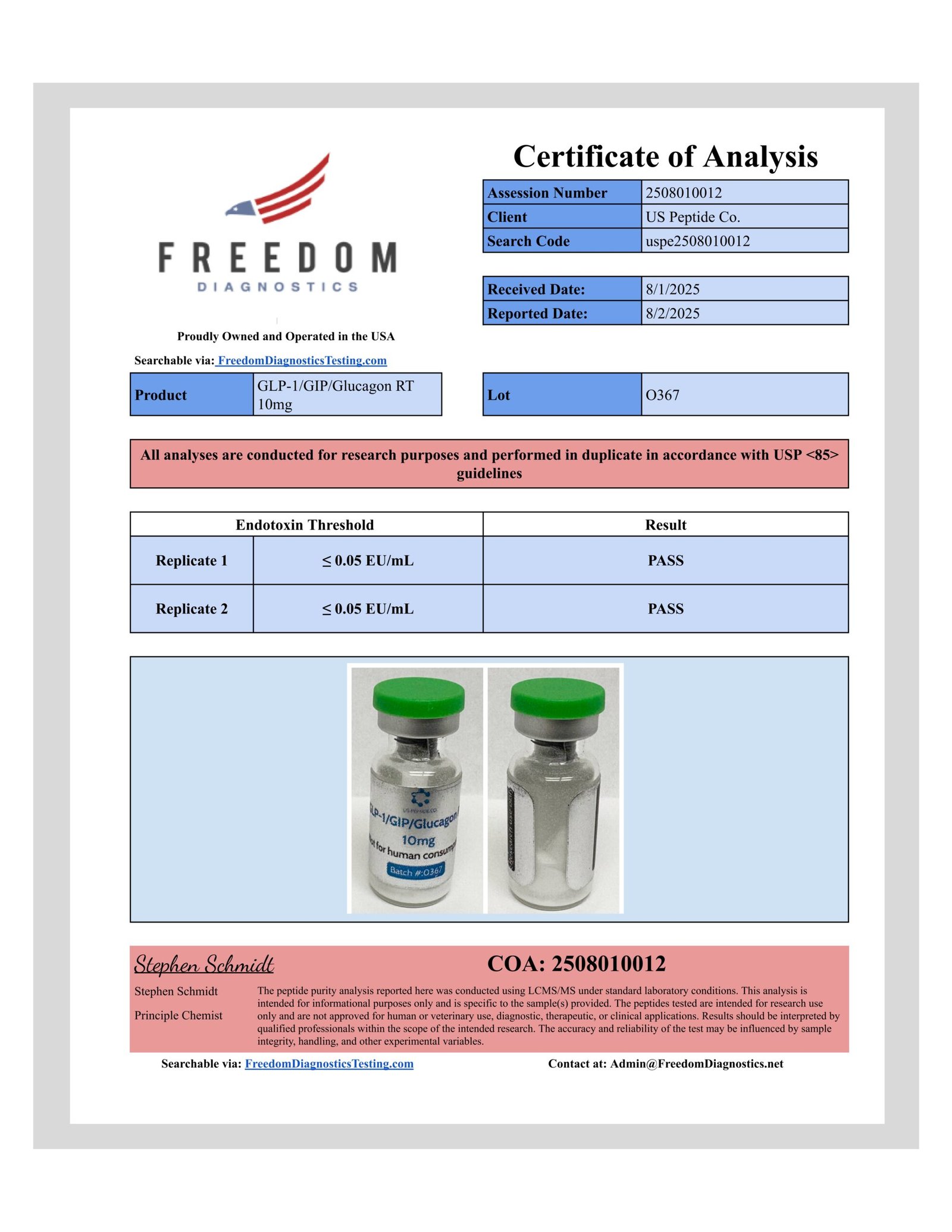
Our Peptide Chemical & Physical Evaluation Solutions
Imaginative Peptides recommends a series of various purity degrees to help you select the appropriate peptide pureness for peptide-based assays and applications. The complying with list shows the recommended peptide pureness levels required for numerous peptide applications. Peptide identification is mainly carried out making use of mass spectrometry (MS), which provides precise dimensions of peptide molecular weight. Furthermore, techniques such as amino acid analysis and HPLC are employed to validate the peptide's identity and pureness, ensuring accurate characterization for various applications. We supply peptide identity verification utilizing mass-based methods selected for the sample and logical objective. This is important when the primary inquiry is whether the observed component matches the designated peptide or whether an alteration has actually been included as expected.